01
D365 F&O architecture
Enterprise ERP solution design, financial core structures, multi-company considerations and integration pipelines.
DynamicsTech brings together Salman Ahmad’s own articles on Finance, Project Accounting, Supply Chain and Electronic Reporting — written from his work as a Solutions Architect in Jeddah.
Salman Ahmad is an AI Solutions Specialist and D365 Applications Solution Architect. His profile connects corporate finance, Microsoft Dynamics 365 and applied AI, with a focus on end-to-end enterprise architecture.
At Dynamics Solution and Technology, his listed experience includes pre-sales and proof-of-concept work, solution design, delivery-team guidance, business analysis, implementation documentation, CRP sessions, UAT, training and go-live activities.
These are drawn from the expertise and responsibilities listed in Salman’s own profile — not client claims or performance promises.
Enterprise ERP solution design, financial core structures, multi-company considerations and integration pipelines.
Capital allocation, advanced cost accounting, financial modelling and regulatory compliance frameworks.
Custom financial Copilots, retrieval-augmented systems over ERP data and workflow automation concepts.
Business analysis, FRD/Fit-Gap/FDD/SDD documentation, CRP, UAT scripts, user manuals, training and go-live support.
Each area links to Salman’s own related guide or profile information. No third-party client logos, testimonials or invented project claims are used.
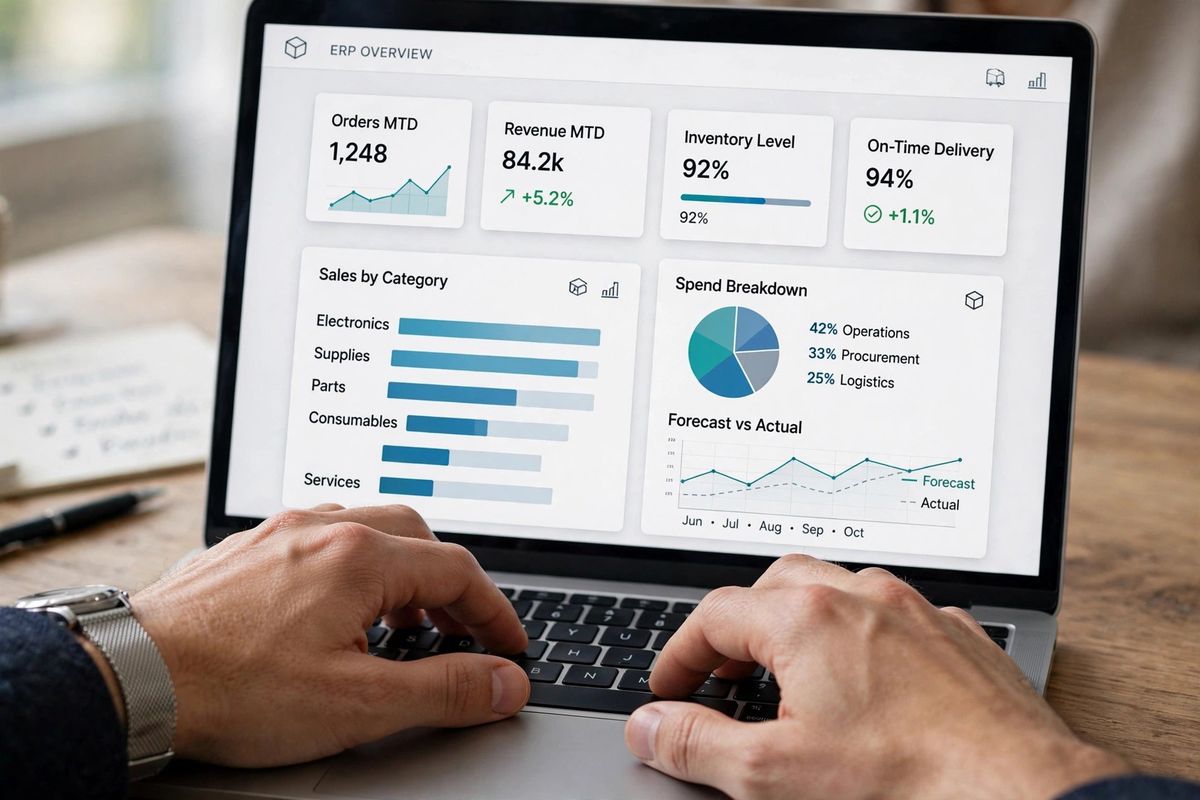
Solution design and configuration insight across Finance, SCM, WMS and Project Accounting, informed by implementation and go-live experience.
Read the Charges guide
Inventory flow, replenishment and consumption concepts explained through Salman’s own Supply Chain and Inventory posts.
Read Replenishment Requisition
Electronic Reporting versions and menu items, electronic payments and e-invoicing topics reflected in Salman’s profile and articles.
Read Electronic Reporting Part 2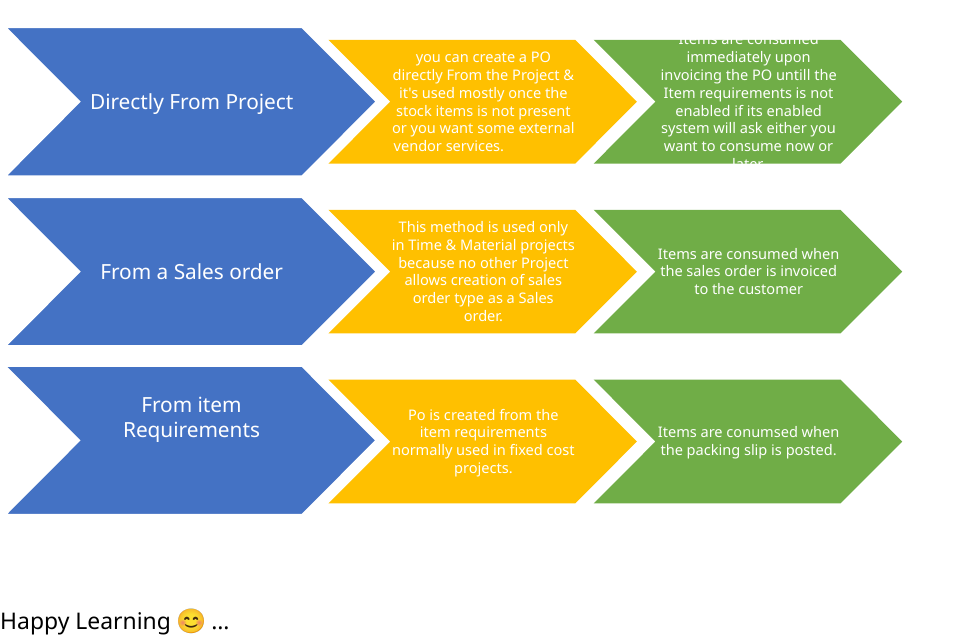
Project purchase-order creation methods — directly from a project, from a sales order and from item requirements — and when items are consumed.
Read Project Purchase Orders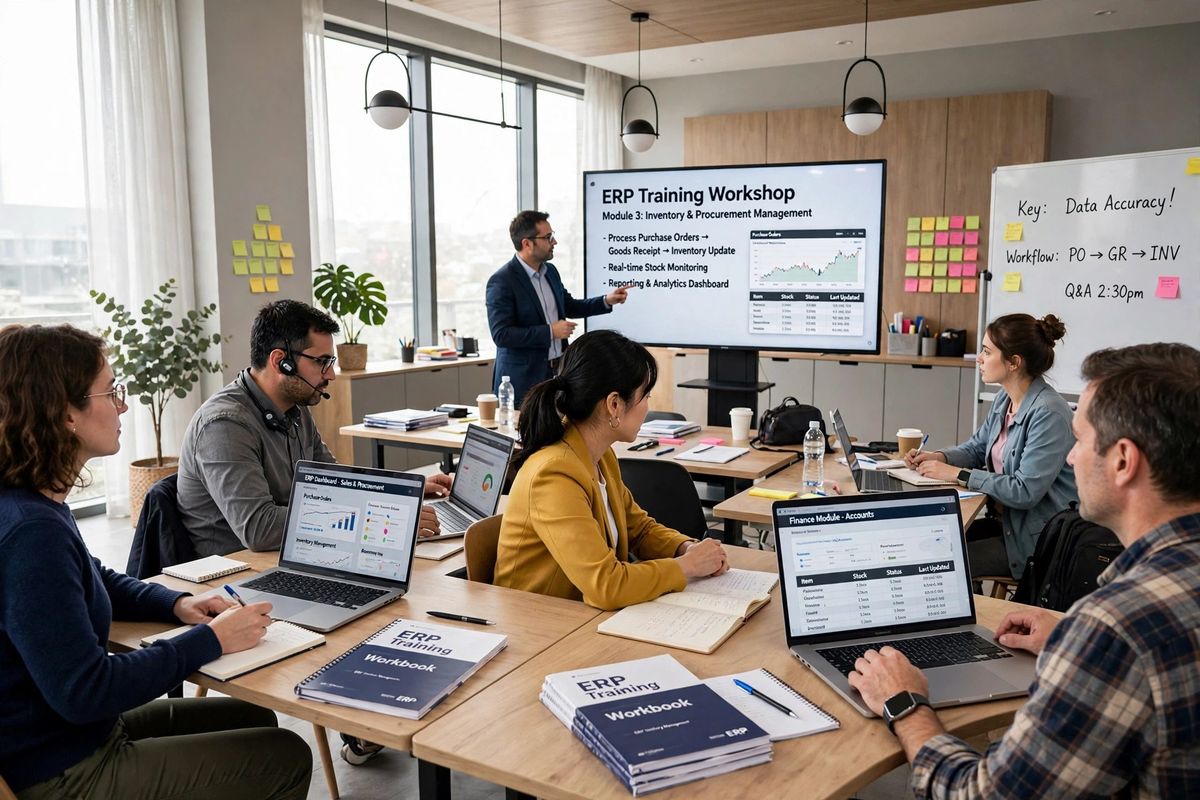
CRP, UAT and user-training experience listed in Salman’s profile, supported by step-by-step technical guides written for practitioners.
See experience and training backgroundSearch or filter the forty-two original posts currently published on DynamicsTech. Article wording remains exactly as supplied by the author.
All 17 chapters: 26,900 words, 101 screenshots, 150+ field tables. Letters of guarantee, letters of credit, documentary collections, postdated checks, bills of exchange and promissory notes — free Chapter 1 preview.
A company rarely pays or gets paid with cash alone. A contractor that bids for a government tender must attach a bank guarantee to the bid. An importer that buys steel from China opens a letter of credit so that the mill ships the goods. A distributor in Riyadh or Lahore receives a stack of postd…
Before the first guarantee can be requested or the first postdated check registered, a handful of switches, accounts, journals and number sequences must exist. SAMF had none of them. This chapter walks through the shared foundation in the order we built it, and explains every field. The set-up th…
A bank does not issue guarantees and letters of credit one by one on a blank sheet. It first grants the company a facility: a credit line with a limit for each kind of document – say SAR 5 million for performance bonds and SAR 2 million for bid bonds – valid for a period, with agreed commissions …
All 13 chapters in one PDF: 315 pages, 321 screenshots, 14 diagrams. Launch price $29, free Chapter 1 preview.
Project management and accounting is the module of Dynamics 365 Finance that records what a project costs, what it earns and when that cost and revenue reach the general ledger. A construction company uses it to follow each building contract, a consulting firm uses it to bill the hours of its consultants, and any company can use it to collect the cost of an asset it builds for itself before that cost becomes a fixed asset.
A letter of guarantee (LG, bank guarantee) is the bank's written promise to pay a beneficiary if its customer, the applicant, does not meet an obligation.
Hi everyone hope you all are doing well.
Hi everyone hope you all are doing well.
In a recent meeting with a client from one of my friends, the client asked if there is a way if we can settle the automatically credit notes or RMA with the open invoices.
The role of the scheduling system in Supply Chain Management is to plan the actual production process so that each operation in the production route is assigned a starting and ending date and time, and that the materials needed for production are available when the operation starts.
Chapters 1 to 10 covered what happens during the sale. This bonus chapter looks at the two ends around it: the pre-sales side, where the base price of an item is built from the supplier's list price, and the money side of promotions – a fund that limits how much discount we give, and a claim that asks the supplier to pay back its share of a discount.
This is the last chapter of the series. When a price is wrong, users do not say "the margin component code is missing in the price tree" – they say "the hotel got the wrong price". This chapter collects the tools to find out why, the periodic jobs of Pricing Management, and a checklist of every trap we met in chapters 1 to 9.
Over eight chapters we built prices, price groups, margin adjustments and discounts, and every time we created a fresh sales order to see the result. Real order takers work differently: they open old orders, change a price by hand, remove a discount the customer should not get, and they need a rule that depends on how the order came in. This chapter follows the sales order through these everyday situations.
In the last two chapters I kept every test clean: one adjustment or one discount per line. Real price lists are not that polite. A hypermarket order of 10 cartons of sunflower oil qualifies for the SunGold 10% promotion and for the order value discount at the same time. A hotel gets a surcharge for all products and a different one for oil. Which rules win, which are combined, and how?
In the last chapter we built the unit price in layers: trade agreement price plus a margin price adjustment. Today we add the next layer – discounts. A discount does not change the unit price; it is shown as a discount on the sales order line and reduces the net amount.
Until now every price in this series came from one place: a trade agreement line (or the item base price when no line matched). In real life a price is often built in layers: a list price, then a surcharge for one segment, a seasonal uplift, a markdown for slow movers. Changing the trade agreement for every such layer is not practical. Pricing Management solves this with margin price adjustments: rules that move the price up or down on top of the base price.
In the last chapter the sunflower oil ended up with several prices at the same time: a general price of 98, a price of 95 for Central hypermarkets and a September price of 92 for Western hypermarkets. The system always picked the most specific rule, the one with the highest combination rank.
Today we go deeper into sales trade agreement prices, because in real projects this is where most of the pricing lives. We will answer four very practical questions with real sales orders:
Today we connect the groups to the pricing engine. The object that does this is the price component code. Once that link exists, we will create one small price list and – for the first time in this series – see the price on a sales order change because of a Pricing Management rule.
Today we will build that "when". In Pricing Management every pricing rule – a trade agreement price, a price adjustment, a discount – is written against conditions such as "customer region is Central" or "product brand is SunGold". These conditions are called price attributes, and they are grouped into price attribute groups. Every setup that we do in the next chapters depends on what we build today, so this chapter is the foundation of the whole series.
Today we are starting a new series on Pricing Management in Dynamics 365 Finance & Operations / Supply Chain Management.
The implementation cycle in D365 F&O refers to the series of steps and activities involved in deploying and configuring the system to meet the specific needs of an organization.
Charges In D365 F&O
As a Cost & Management Accountant, navigating the intricacies of costing can feel like a high-speed race against time. There's so much to discuss about costing mechanisms, but amidst the flurry of ongoing activities,…
Hi everyone, Lets explore some features available to create Purchase orders in D365 F&O for project accounting modules and when the items are consumed based on the process that you will use.
In dynamics 365 F&O following is the basic inventory flow:
Replenishment and consumption are two concepts often used in the context of inventory management or supply chain management.
Electronic Reporting| How to manage versions & use menu items | Part 2
Go to Cash & Bank.
FIXED ASSETS
Salman Ahmad, Solutions Architect at Dynamics Solution and Technology in Jeddah, Saudi Arabia. The site publishes his own Dynamics 365 Finance & Operations posts.
The current articles cover Charges, CVP models, Project Purchase Orders, Inventory Accounting Models, Replenishment Requisition, Implementation Cycle, Electronic Reporting, Electronic Payments, Fixed Assets and Pricing Management.
No. DynamicsTech is an independent informational site and is not affiliated with, endorsed by, or sponsored by Microsoft. Always test configuration changes in a non-production environment first.
Email [email protected], call +966 549 904 967 or +92 309 558 9716, or connect through the LinkedIn profile linked in the footer.
Start with the article library, or use the contact page if you are reporting an error in a guide.